
King County Arrest History
The King County Sheriff's Office is the main local law-enforcement custodian. Texas Department of Public Safety officers may make highway or state investigations, while Texas Parks and Wildlife game wardens handle some outdoor offenses. A task force or federal officer may also be involved. King County has no incorporated city and no city police department, so a searcher should not expect a municipal booking desk or police blotter. The first practical question is which agency made the arrest. The next is which facility accepted the person.
An arrest history is not one document. The officer creates an incident or arrest report. Booking staff create an intake record, take fingerprints, record initial charges, and log custody or release. A magistrate creates warning and bond records. Prosecutors and clerks later create a case file if charges are filed. Those records can disagree at first because an initial allegation may be changed, declined, dismissed, or replaced. King County arrest records must be read as a sequence, not as a verdict.
Start King County Arrest Records Locally
The reliable starting point is the King County Sheriff's Office. Call (806) 596-4413 with the person's full name and an approximate booking date. Ask who made the arrest, whether the person remains in custody, the current holding county or facility, and the booking identifier. The same line is the published nonemergency contact after hours. Use 911 only for an emergency. The official sheriff contact page supplies the phone, fax, weekday hours, and mailing channel.

The captured sheriff page shows why a local call comes before an online search: it supplies direct contact details, but it does not offer a public jail roster or booking gallery.
King County Sheriff's Office
P.O. Box 66
Guthrie, TX 79236-0066
(806) 596-4413
Fax: (806) 596-4316
Weekdays, 8 a.m. to 5 p.m.
Note: King County publishes no separate records-division name, records email, local clearance service, or law-enforcement copy-fee schedule.
Looking Up King County Arrests
No public King County booking database completes this task. A channel-complete check moves from the current custodian to the permanent record. Keep the date range tight and use a booking, incident, warrant, or case number when one is known. Each office holds a different part of the event.
- Call the King County sheriff. Confirm the arresting agency, booking site, current holding facility, booking ID, listed charge, bond, and issuing court.
- Request the arrest report from the agency that made the arrest. Ask the actual jail custodian for the booking sheet and custody or release record.
- Contact the King County clerk or 50th District clerk after charges are filed. Match the booking to the court case and verify later amendments or disposition through King County criminal court cases.
- Use the TxDPS Criminal History Search for the statewide public subset, mainly reported convictions and deferred adjudications. It is not a recent-arrest roster.
- Send a focused written Texas Public Information Act request when phone and online checks do not supply the record. Direct it to the office that created or holds the material.
For the most accurate review of your own Texas record, TxDPS recommends fingerprint comparison through FAST, delivered by IdentoGO. The public name search can miss a record or confuse people with similar names. It also does not reveal the full nonpublic Computerized Criminal History file.
King County Bookings Reach TxDPS
A reportable King County arrest creates a fingerprint-based arrest cycle. Booking personnel attach identity and charge data to a tracking control number and transmit the event into Texas criminal-history infrastructure. Later charging and disposition reports from prosecutors, clerks, and supervision agencies should connect to that same cycle. A missing tracking number or reporting delay can leave the public result without the expected court outcome.
The practical flow is: Arrest report → booking and fingerprints → magistrate and bond record → prosecutor review → court filing and disposition → TxDPS update. The sheriff can explain local arrest or booking material, but the clerk controls the authoritative case file. When your own TxDPS history lacks a disposition, use the TxDPS Error Resolution Unit process and support the request with certified court documents. Do not infer the outcome from the first charge line.
Inside a King County Arrest Record
A King County booking entry may identify the event and its first custody status. The officer's report may add the stated basis for arrest and a probable-cause narrative. Public release can be narrower than the full file, especially during an active investigation. Medical screening, protected identifiers, confidential victim data, and juvenile material are not ordinary public fields.
| Arrest details | Date, time, location, arresting agency, and warrant or warrantless basis. |
|---|---|
| Booking identity | Booking number, name or aliases, physical descriptors, fingerprints, and intake time, with sensitive identifiers restricted. |
| Initial charges | Offense descriptions or statutes recorded at intake; these may change after prosecutor review. |
| Bond and court | Bond type or amount plus the magistrate or issuing court tied to the early custody record. |
| Custody status | Holding or transfer location, release time, and destination when that information is public. |
| Booking photograph | Ask the actual jail custodian. King County posts no official online mugshot gallery. |
| CCH tracking | The control number used to link reportable arrest and later disposition submissions. |
Property inventories and medical or mental-health screening may also be created during intake, but those details are not standard public booking information.
Post Is a Conditional Booking Fallback
King County does not publish a named local jail facility, capacity, visitor schedule, mail rule, or deposit vendor. A county agenda from September 2025 contemplated an interlocal agreement to house King County inmates at the Garza County Law Enforcement Center in Post. That supports one warning only: a King County arrestee may be housed outside the county. It does not prove that Garza holds every current detainee. Confirm the facility and booking ID with King County before traveling, sending mail, or paying a vendor.
If the sheriff confirms a Garza transfer, the official Garza County sheriff page lists the Law Enforcement Center at 412 E. 15th Street, Post, Texas, and the jail telephone as (806) 990-9974. Ask King County or the arresting agency for the report, then ask Garza for its booking and custody record. This split reflects who holds each document.
Booking Logs and Recent Arrests
There is no confirmed King County online booking log, current-inmate roster, most-wanted page, sheriff app, or mugshot gallery. That absence makes a phone check the fastest official recent-arrest channel. Ask whether the person was booked, transferred, released, or taken to another jurisdiction. Record the agency name, facility, booking number, charge, bond, and court so later calls refer to the same event.
A blank online result elsewhere proves little. TDCJ does not list a person merely held before trial in a county jail, and federal tools cover federal custody. Recent entries may not yet appear in a court index or public TxDPS result. King County arrest information can also be withheld in part when disclosure would interfere with an active investigation, though core offense and arrest facts may remain public under the Texas basic-information rule.
Note: No official King County source supports publishing local names or booking photos here; obtain releasable facts from the record custodian.
Request King County Arrest Records
A focused written request works better than a broad demand for every record about a person. Identify the record as an incident report, arrest report, booking sheet, custody log, warrant record, or jail log. Add a narrow date and time range, location, incident or case number if known, arresting agency, and the desired electronic or paper format. The Texas Public Information Act requires a request for existing information. It does not require the sheriff to answer questions or create a new report.
The Texas Attorney General's official request guide explains how to identify the right governmental body and submit a clear request. Its steps are especially useful in King County, where an arresting agency, receiving jail, and clerk may each hold separate records.
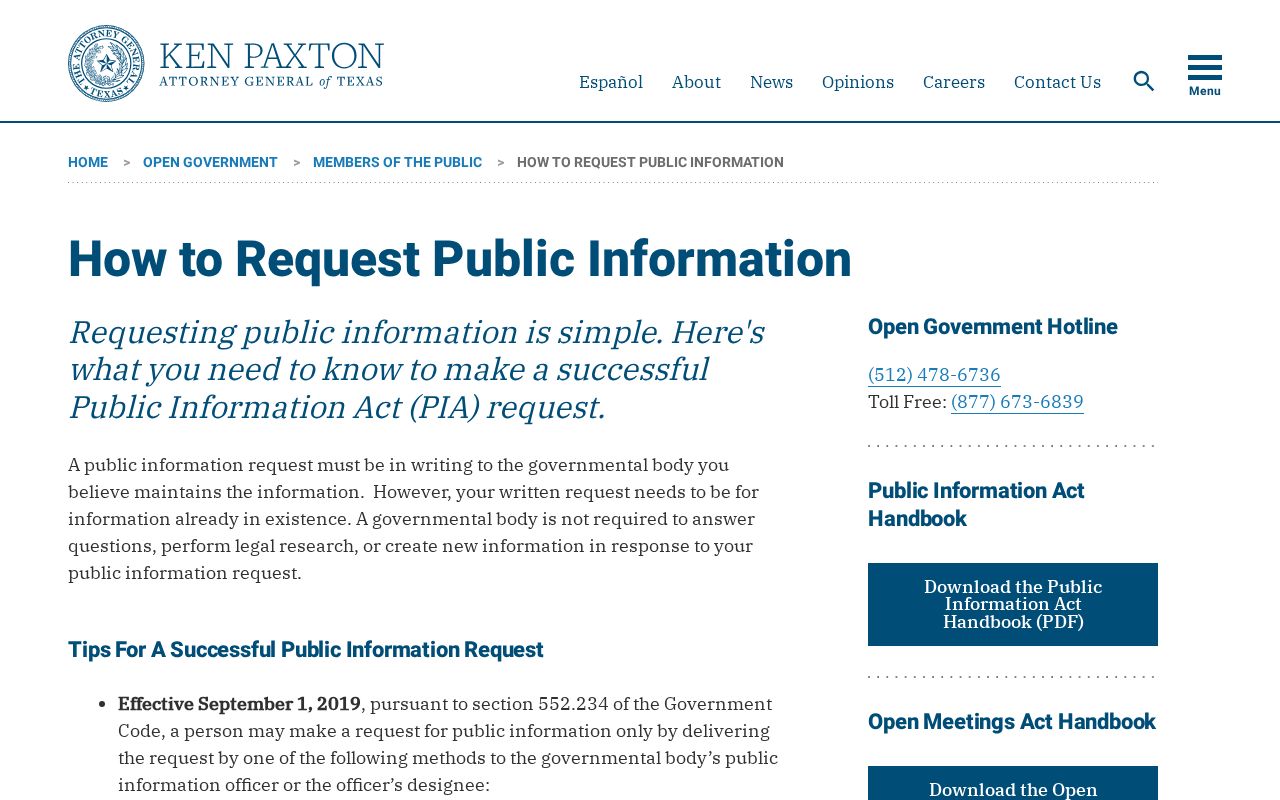
The official guide reinforces the need to send each part of the King County arrest request to the office that actually maintains it.
King County State Prison Searches
Use TDCJ records only after a person enters the sentenced state-prison system. Search by last name with optional first name, sex, and race, or use a TDCJ or state identification number. A result may show the state facility, offense, sentence, and parole-related dates. It does not show a King County pretrial booking, local bond ledger, jail housing unit, or local booking photograph. The official TDCJ Inmate Information Search displays the relevant name and number fields.
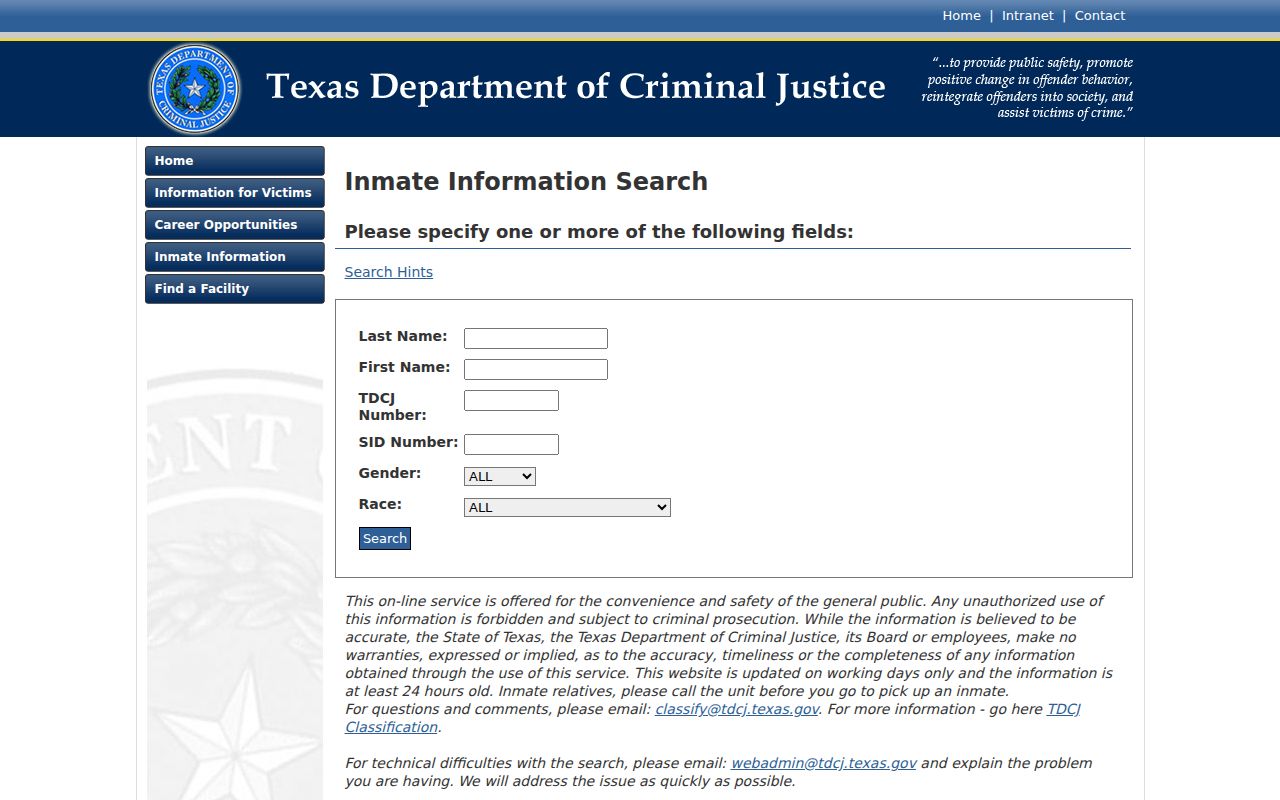
The TDCJ search image shows the name and number fields that distinguish sentenced state custody from a recent King County booking inquiry.
Parole After King County Convictions
Parole is another later stage. The Texas Board of Pardons and Paroles makes release decisions, while the TDCJ Parole Division supervises releasees. Neither agency replaces the sheriff when the question concerns a new local arrest. The official parole authority page identifies the state decision-making body.
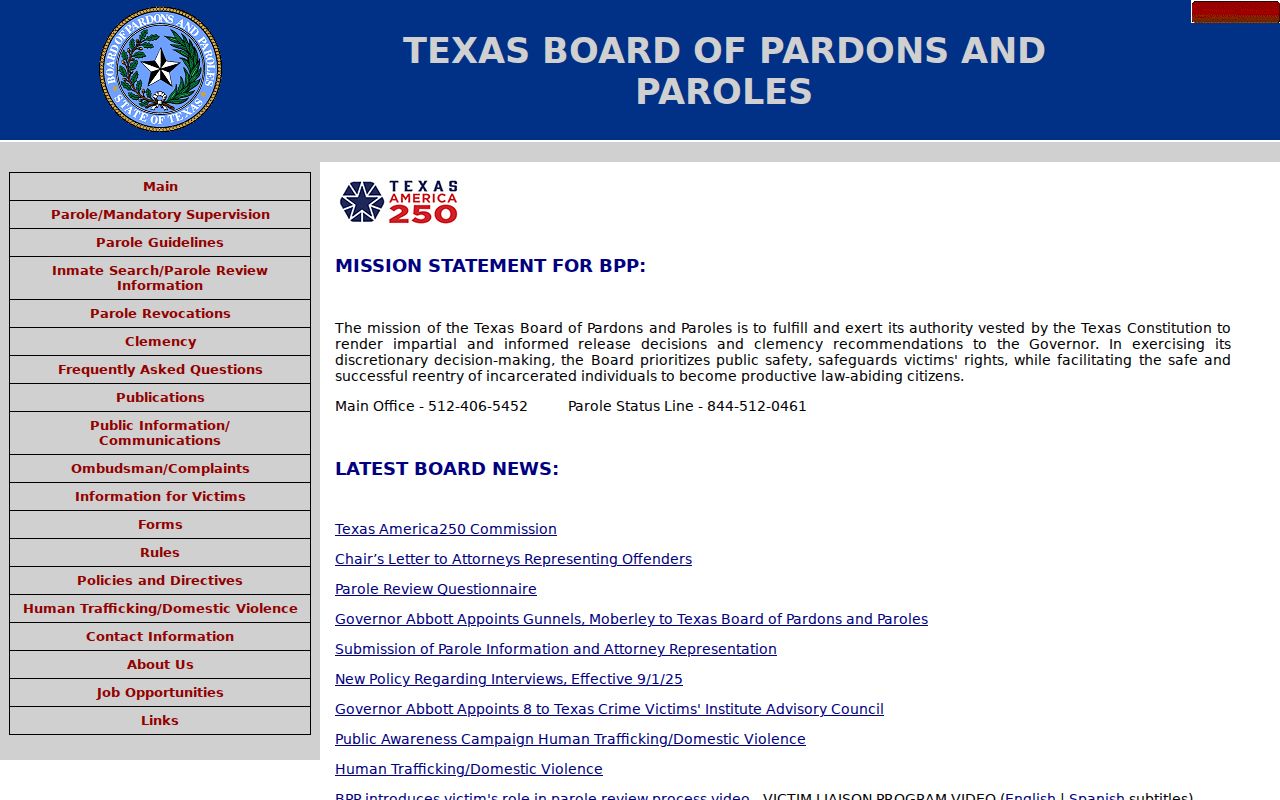
The parole authority page marks a post-conviction channel, well beyond the first King County arrest and booking record.
Federal Custody After King County Arrests
Federal officers and courts keep their own files, and a person in BOP custody will not be found through a county roster that does not exist. For that distinct custody level, open the Federal Bureau of Prisons Inmate Locator.
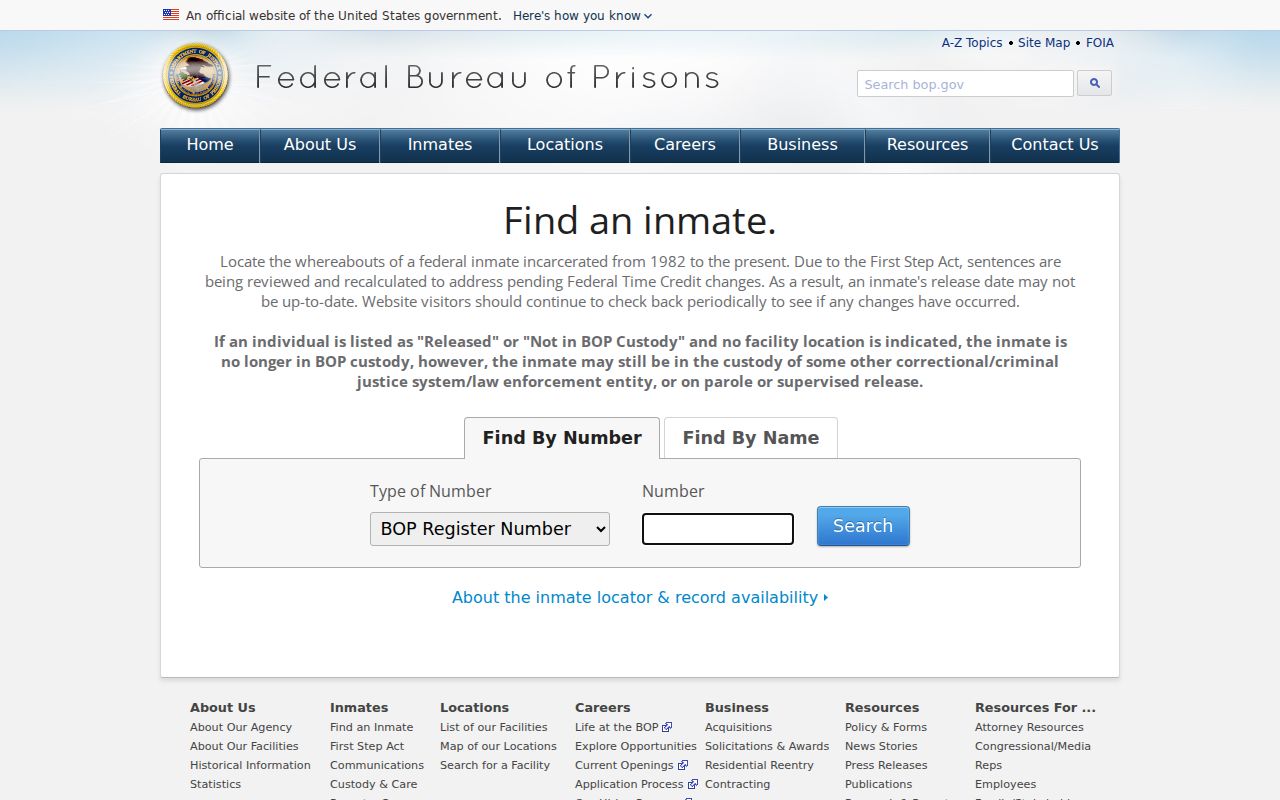
The federal locator image underscores a final boundary: custody level must be known before choosing a search system.
Arrests Are Not Convictions
An arrest records an exercise of custody based on a warrant or asserted legal grounds. It does not establish guilt. The arresting agency and receiving jail keep the first records, while the court decides what filed charges and final result belong in the case. A prosecutor may decline a charge, amend it, or pursue a different offense. A case may end in dismissal, acquittal, deferred adjudication, or conviction.
| Point | Arrest record | Conviction record |
|---|---|---|
| Creator | Arresting agency and booking custodian | Court clerk after a judicial result |
| Meaning | Shows that custody and booking were recorded | Shows a court finding or plea of guilt |
| Best source | Sheriff, arresting agency, or actual jail | King County or 50th District court file |
| Possible outcome | Release, no filed charge, or later court case | Sentence and later appeal or record restriction |
Note: An arrest is not proof of guilt, and the filed case may differ from the allegations listed at booking.