
King County Criminal Court Cases
King County criminal court cases do not split along the usual district-court and county-court line. The 50th Judicial District Court serves King, Baylor, Cottle, and Knox Counties. It has original felony jurisdiction. A local provision in Texas Government Code §26.235 also transfers broad county-court criminal jurisdiction to that district court, while leaving the county court a limited set of functions. That makes advice stating that every Class A or B misdemeanor belongs in the county court unreliable here.
The countywide King County Justice Court handles Class C, fine-only criminal matters and also performs magistrate and warrant functions. King County has no incorporated municipality, so there is no municipal court docket to search. The Texas Judicial Branch trial-court overview helps explain these levels.

The court structure shown there is the starting point, but King County's transfer statute determines which local clerk should hold a particular criminal case file.
King County Four-County Felony Court
The 50th District is a shared court, not a court limited to Guthrie. A King County felony may be filed at the King County courthouse even though the judge, district attorney, supervision staff, or court administration also works across the other three counties. This dispersed structure makes the court name and county of filing just as useful as the defendant's name when seeking a record.
Use the official Texas Judicial Directory to verify the current district judge, clerks, and regional appellate contacts before sending a request.
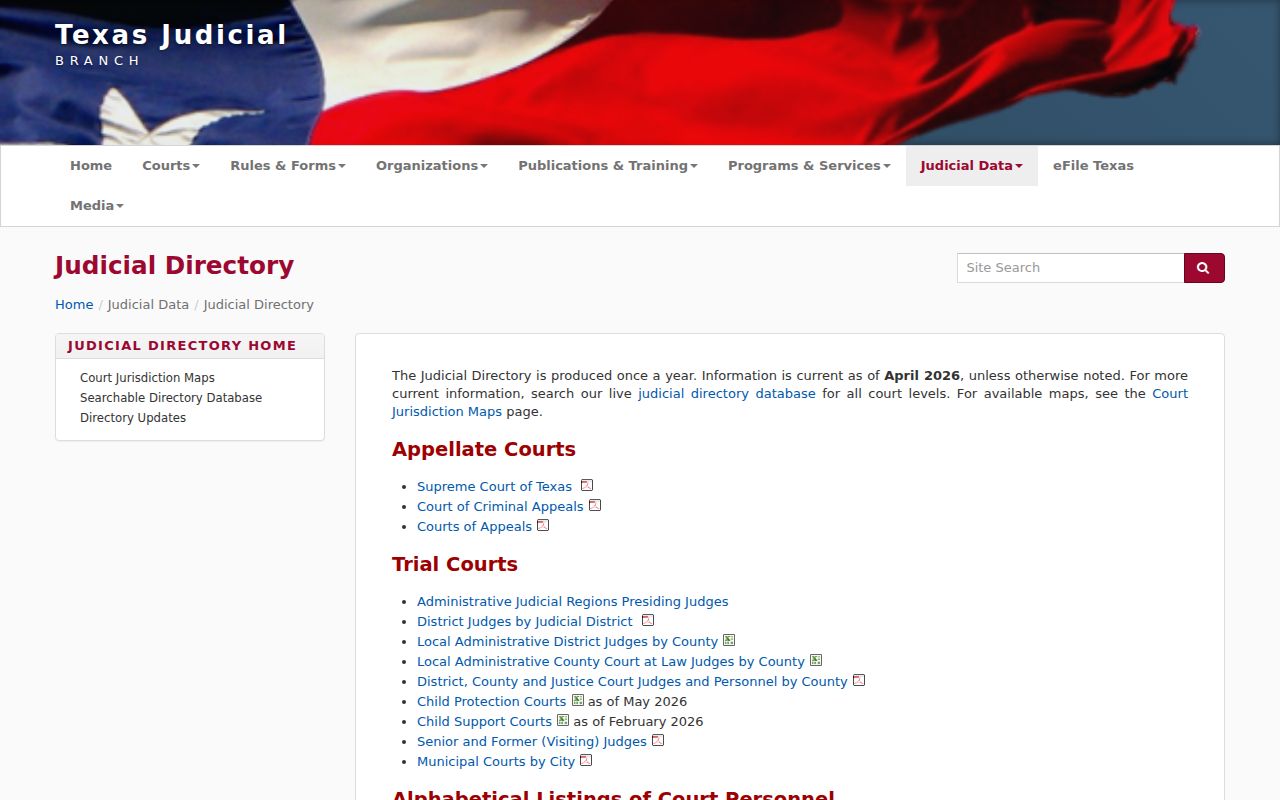
The directory is especially useful when a visiting-court schedule or shared officer makes a courthouse phone call more effective than a broad online search. Appeals from King County travel to the regional Seventh Court of Appeals, so an appeal may not remain in the same local file system.
Searching King County Case Records
Search by case number when it is known. It is the strongest way to avoid a name match with the wrong person. The statewide re:SearchTX court platform can locate participating court data, but clerk coverage, document access, account level, and fees can vary. Treat each online result as a lead until the King County clerk confirms the file.
- Choose a person or case-number search in re:SearchTX.
- Filter for King County or the 50th District Court when that option appears.
- Narrow the result by criminal case type and filing or event dates.
- Open the docket and compare the court, case number, charge, and status.
- Ask the clerk for the register, judgment, copies, or certification needed.
The live re:SearchTX interface illustrates the statewide discovery layer.
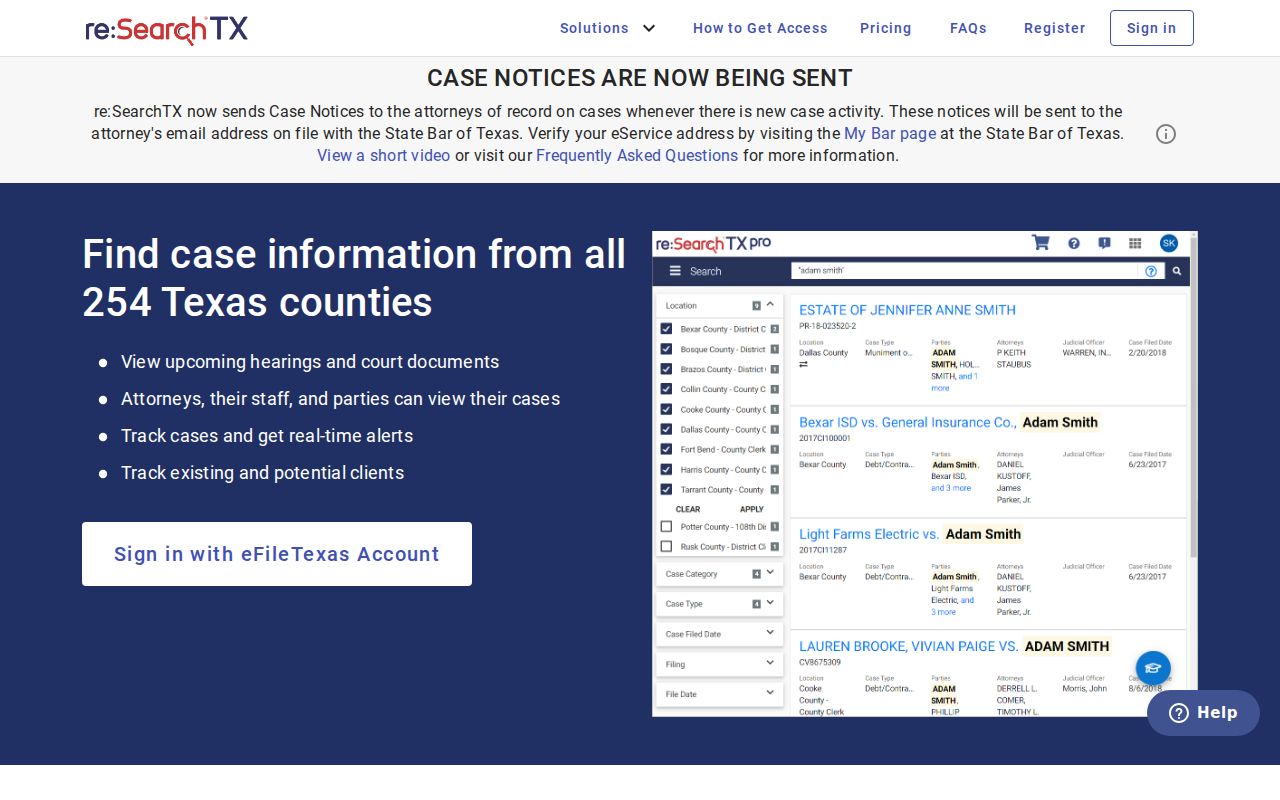
Its filters help narrow a King County case search, but an absent result does not prove that no file exists.
| Field | Type | Required | Notes |
|---|---|---|---|
| Person or business | Tab and text | One search mode | Used for name-based discovery |
| Case | Tab and text | One search mode | Case number is the best key |
| County or court | Filter | Optional | Choose King or 50th District when shown |
| Case type | Filter | Optional | Labels depend on the source court |
| Date range | Date filters | Optional | Narrows filing or event dates |
| Search | Button | Not applicable | Runs the selected query |
Note: A statewide search is a finding aid; the King County clerk remains the source for an authoritative file.
King County Clerk Portal Gaps
The King County Clerk page exposes an iDocket link, yet the research does not establish complete criminal coverage or promise that every filing has a downloadable PDF. Call the combined county and district clerk with a full name, an approximate filing year, and the case number if known. Ask which index contains the matter and whether the requested year is digital, archived on paper, or held on microfilm.
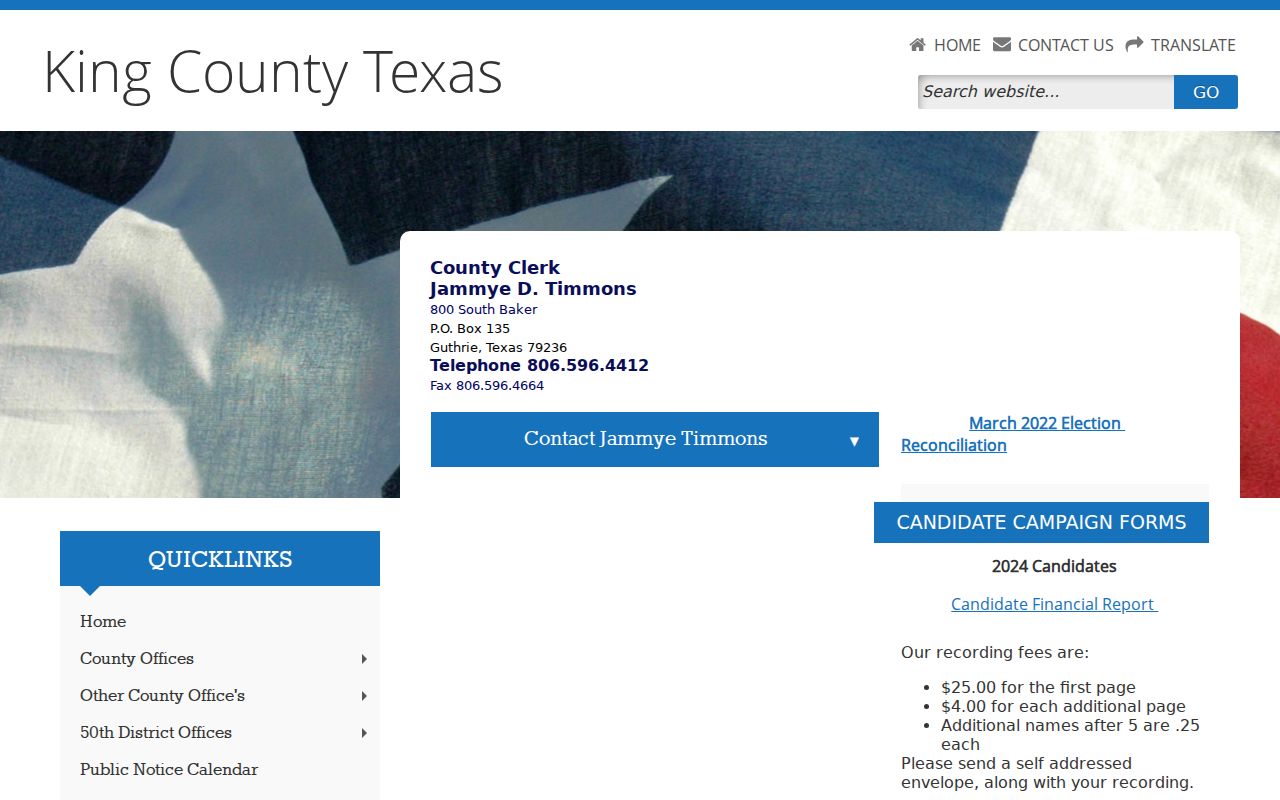
The clerk page connects searchers to the local custodian, which is the sound fallback when iDocket or re:SearchTX shows only a docket line.
Request the docket register and final judgment before ordering the whole file. Also ask about electronic delivery, per-page charges, and certification. The clerk's posted recording charges are not proof of the price for criminal-case copies, so a current quote is needed. The official King County hub provides the main courthouse contact when the correct counter is unclear.
Inside a King County Case File
A court file begins with a complaint, information, or indictment and grows as the case moves. It may include settings, motions, plea papers, orders, a judgment, and sentencing entries. The docket is the event list. It can point to key papers, but a short event label may not state what a filed motion argues or what an order requires. Request the document itself when that detail matters.
| Case number and court | Identifies the file, filing court, case type, date, and status. |
|---|---|
| Parties | Names the State of Texas, defendant, and attorneys when public. |
| Charging document | States the filed offense, statute, degree or class, and count. |
| Docket entries | Lists filings, settings, motions, pleas, orders, and later events. |
| Hearings | May show date, type, judge, and courtroom when supplied. |
| Disposition | Records a conviction, deferred result, dismissal, acquittal, no-bill, or pending status. |
| Sentence and finance | May state confinement, supervision, fines, costs, and payments. |
| Documents and redactions | Availability varies; protected identifiers and restricted matters are not publicly exposed. |
Public document access depends on clerk participation, security rules, account level, and cost. Never assume every docket entry has a free image. A certified judgment from the clerk carries more weight than a portal screen when correcting one's own record.
King County Criminal Docket Terms
Disposition words can look similar while producing very different results. The filed charge may also differ from the arrest charge because a prosecutor reviews the evidence and chooses what, if anything, to file. Read the charge, disposition, and judgment together instead of treating the booking label as the final outcome.
- Indictment
- A grand jury's formal felony accusation. It is a charge, not a finding of guilt.
- Deferred adjudication
- A plea or finding followed by supervision without a final conviction at that point; Texas may still make it publicly searchable unless restricted.
- Dismissed
- The filed charge ended without a conviction, but that event alone does not erase a separate arrest or booking record.
- Acquitted
- A not-guilty result after the issue was decided.
- No-billed
- The grand jury did not return an indictment on the presented felony charge.
When an online label is unclear, ask the King County clerk for the signed judgment or dismissal order. That paper usually resolves what a short docket code cannot.
How a Criminal Case Moves
Law enforcement and the courts create separate records at different points. After a prosecutor files a complaint, information, or indictment, the court addresses arraignment and pretrial matters. A plea or trial determines the route to disposition. Sentencing follows when the result calls for it. Motions, resets, warrants, and appeals can add events, so not every King County criminal case follows the line without a pause.
Case flow: Charges Filed › Arraignment › Pretrial › Plea or Trial › Disposition › Sentencing
The judgment and sentence then feed the disposition-reporting process used by the Texas criminal justice information system. A delay or unmatched tracking number can leave a statewide history without the local outcome. Compare the clerk's certified case record with the Texas Department of Public Safety result and its error-resolution instructions when reviewing and correcting your own history.
Note: A court filing records an accusation until a plea, trial, dismissal, or other disposition resolves it.
King County Justice Court Records
Fine-only Class C cases stay on a different track from the main 50th District criminal docket. The King County Justice Court also performs magistrate functions and may issue arrest or search warrants. Its contact is P.O. Box 67, Guthrie, Texas 79236, phone (806) 596-4481, and fax (806) 596-4664. Searchers should not assume a district-court search will reveal a citation filed only in justice court.
This split is more important in King County because Guthrie is an unincorporated census-designated place. No municipal court exists within the county to hold another set of city ordinance or fine-only criminal records. Give the justice court a name, date, and citation or cause number when possible. Ask whether the matter is open, disposed, or transferred and how to obtain the judgment.
A warrant entry also needs live confirmation from the issuing court or law enforcement. A stale docket screen may not reflect a later recall, execution, or status change.
Case Record Access & Restrictions
Open court records can still contain protected parts. Juvenile information, victim or minor identifiers, driver data, financial details, and material covered by an expunction or nondisclosure order may be sealed, omitted, or redacted. Some online views expose less than the paper or clerk-maintained file. That does not mean a public user is entitled to the unredacted version.
Court files follow judicial access rules, common law, and clerk practice. They are not simply treated like executive-agency records under the Texas Public Information Act. Send a court-record request to the clerk, not to the sheriff. If a King County case does not appear online, provide the clerk enough detail to check older or non-indexed holdings.
The King County District Clerk page is the official local starting point for district case access.
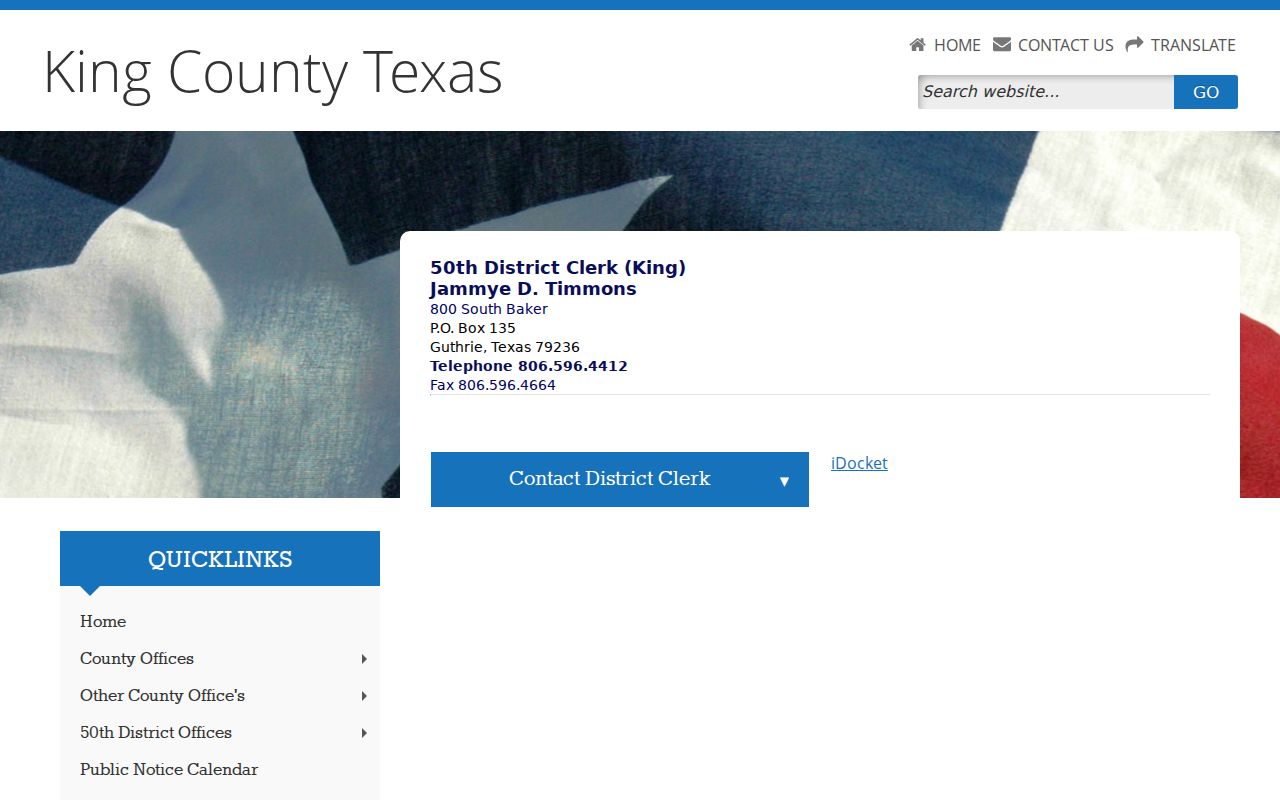
Because the published page does not promise a complete web index or state firm copy fees, confirm the counter, file format, price, and visiting-court schedule by phone before travel.
King County Federal Criminal Cases
Federal charges arising in King County do not appear in the local clerk's criminal docket. King County lies within the Northern District of Texas. Federal dockets and filings are searched through PACER, which requires an account and may charge usage fees under the judiciary's current schedule. Sealed federal documents remain unavailable. The county justice court should not receive a request about a federal warrant.
The Northern District of Texas website identifies the current divisional courthouse and federal clerk contacts.
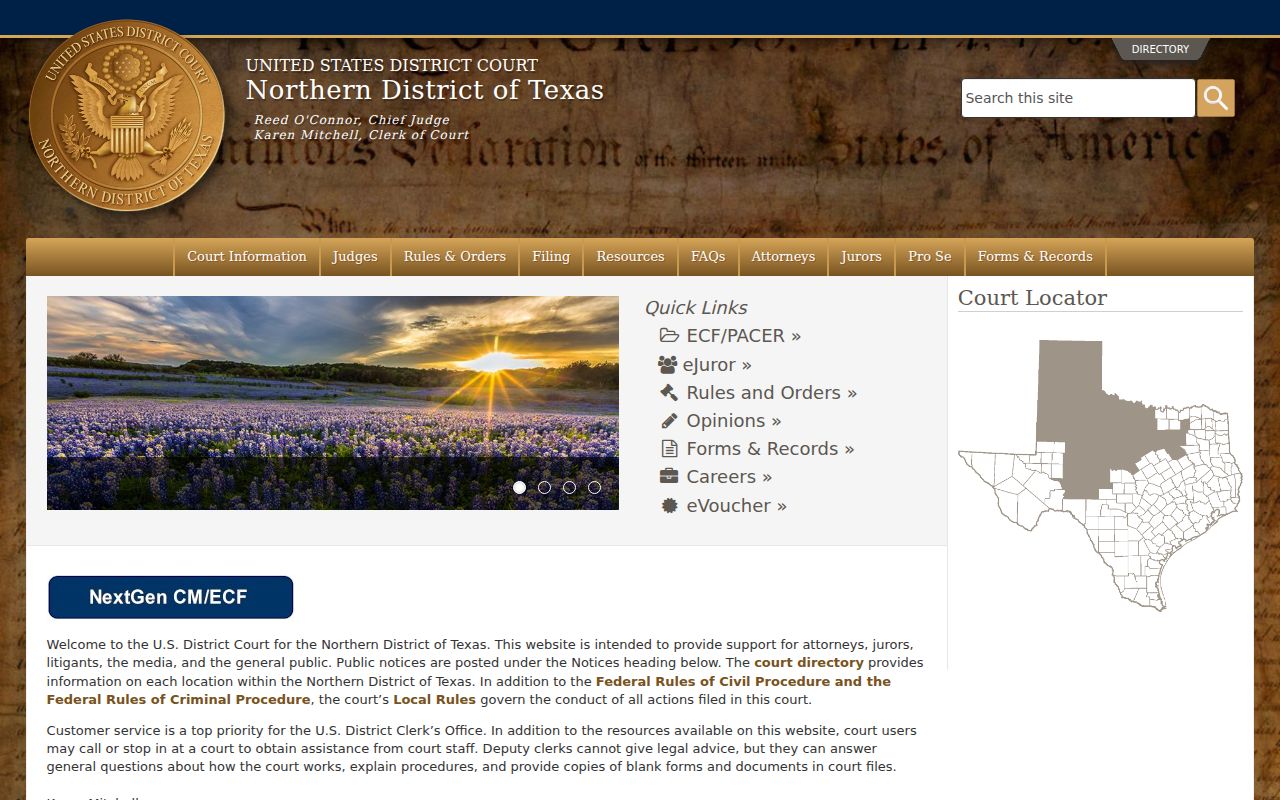
This separate federal channel matters in a county with no federal courthouse. Use the local King County clerks for state charges, the Northern District clerk for federal filings, and the appropriate appellate clerk after an appeal leaves the trial court.
Note: A county case number cannot be used to infer that a matching federal docket exists.